Revolutionary Radio Telescope Takes Its First Steps
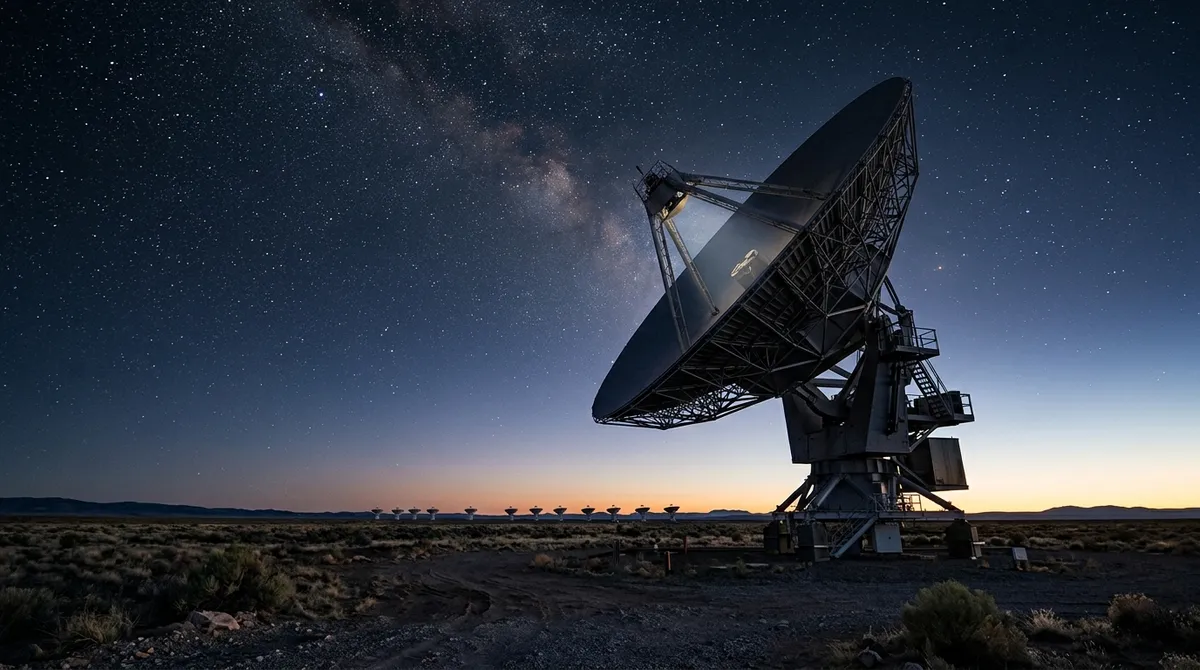
A new era in radio astronomy has begun as the next-generation Very Large Array (ngVLA) prototype antenna achieved its crucial "first light" milestone. According to reports, this engineering breakthrough represents the successful transition from construction to astronomical testing, validating the design for what will become a transformative 244-antenna array.
The prototype has demonstrated its ability to make independent observations while seamlessly collaborating with the existing NSF Very Large Array in New Mexico. This integration capability proves that the new technology can work as a unified system with the current 27-antenna configuration—a critical engineering requirement for the ambitious project.
Ten Times More Powerful Than Current Technology
The ngVLA promises to deliver unprecedented sensitivity and resolution capabilities. Reports indicate the completed array will be 10 times more sensitive than current radio telescopes, opening new frontiers in astronomical discovery. This enhanced power will enable scientists to probe cosmic mysteries that remain beyond the reach of existing instruments.
The timing is particularly significant as the current VLA, now 45 years old, approaches the limits of its technological capabilities. The aging infrastructure has served astronomy well for nearly half a century, but the scientific community recognizes the need for next-generation tools to tackle increasingly complex questions about the universe.
From Black Holes to Cosmic Evolution
The enhanced sensitivity and resolution of the ngVLA will revolutionize our understanding of fundamental cosmic phenomena. According to reports, the array will provide new insights into black holes, galaxy formation, and other cosmic mysteries that current technology cannot adequately study.
Radio astronomy has historically been crucial for major astronomical breakthroughs, from discovering pulsars to mapping the large-scale structure of the universe. The ngVLA continues this tradition while pushing the boundaries of what's possible in observational astronomy.
Economic Impact Beyond Scientific Discovery
The ngVLA project represents more than just a scientific achievement—it's a significant economic investment with tangible benefits for New Mexico. Reports indicate the project will deliver economic advantages through construction jobs, ongoing operations positions, and expanded research opportunities in the region.
This economic dimension highlights how major scientific infrastructure projects serve dual purposes: advancing human knowledge while providing concrete benefits to local communities. The combination of cutting-edge science and regional development makes the ngVLA a model for modern scientific investment.
Engineering Excellence Meets Astronomical Ambition
The successful first light achievement validates years of careful engineering and design work. The ability of a single prototype antenna to integrate seamlessly with the existing 27-antenna system demonstrates the sophisticated planning required for such a complex project.
This milestone marks the transition from theoretical design to practical implementation, proving that the engineering concepts can translate into working astronomical instruments. The prototype's success provides confidence that the full 244-antenna array will function as intended.
Positioning America in Next-Generation Astronomy
The ngVLA represents a major U.S. investment in scientific infrastructure that positions America as a leader in next-generation astronomy. According to reports, this positioning is crucial as international competition in astronomical capabilities intensifies.
While space-based observatories capture public attention, radio telescopes like the ngVLA remain essential for comprehensive astronomical research. Radio waves penetrate cosmic dust and reveal phenomena invisible to optical telescopes, making radio astronomy complementary to other observational methods.
Looking Toward the Future
The first light milestone represents just the beginning of the ngVLA's journey toward full operational capability. As testing continues and additional antennas come online, the scientific community anticipates discoveries that will reshape our understanding of the universe.
The success of this prototype validates not only the technical approach but also the broader vision of creating astronomical instruments capable of addressing the most challenging questions in modern astrophysics. From the formation of the first galaxies to the behavior of matter around black holes, the ngVLA will provide the sensitivity needed to explore these fundamental cosmic processes.
With this achievement, radio astronomy enters a new chapter, one that promises to reveal cosmic secrets that have remained hidden from current-generation instruments.