Understanding the hidden mathematics behind everyday crafts can elevate your appreciation of them. Researchers have developed a fascinating framework that uses knot theory and a doughnut-shaped topology, or torus, to classify textiles like knitting and crochet. But what does this mean for the future of fabric design? Let’s dive into how this new approach could revolutionize the way we think about our favorite materials.
What Is Doughnut Topology?
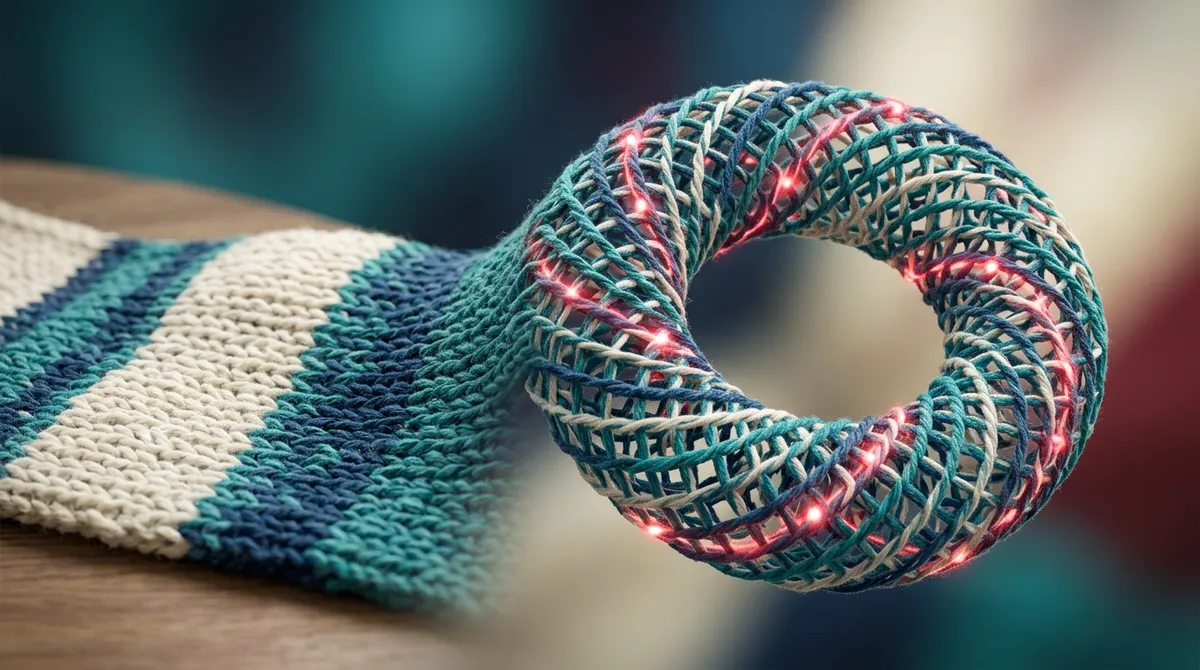
Doughnut topology refers to a model of shape often used in mathematics to describe surfaces like a torus—think of a doughnut or an inner tube. This structure provides a unique way to visualize and analyze the properties of textiles. Using this topology, scientists can study how flaws or defects in knitted or crocheted fabrics behave as they propagate.
Key Discoveries in Fabric Performance
The researchers found that the way defects spread through a material can indicate whether a textile is knittable and help in designing fabrics that possess tunable durability or specific unraveling behaviors. Imagine clothing and accessories that could stretch or maintain their shape under various conditions!
This insight is especially important as it merges traditional textile practices with the principles of cutting-edge materials science. How a simple flaw interacts with the surrounding stitches becomes a crucial factor in determining the material's performance.
The Potential for Smarter Fabrics
Why does this matter now? As the world demands smarter and more sustainable designs, understanding how structural changes can alter fabric performance opens up new frontiers in material engineering. Instead of focusing solely on the types of fibers used, you can manipulate the structure of fabrics to achieve desired characteristics—making textiles stronger without having to invent new materials altogether.
For example, consider how different knitting patterns affect the integrity of the fabric. This research can guide creators in choosing the right patterns to minimize weaknesses while maximizing functionality.
Connection to Other Fields
The implications of this research reach far beyond fashion. The classification insights drawn from doughnut topology could have significant applications in soft robotics, polymers, and even biological materials. Engineers working on soft robots, for instance, could employ these techniques to enhance the materials used in robot skin, allowing for better adaptability and resilience.
Why You Should Care
Next time you pick up a knitting or crochet project, think about the math behind your stitches. This research not only connects a beloved craft to the realms of physics and engineering but also empowers creators like you to explore new possibilities in textile design.
By considering how fabrics interact structurally, you can begin to harness the potential of materials to suit your needs—whether it’s crafting items that last longer, resist damage, or behave in unexpected ways.
Final Thoughts
Doughnut topology represents a breakthrough in how we classify and understand textiles. With its focus on structural changes and defect propagation, this approach invites a re-examination of traditional crafts and their relevance in a modern technological context. By leveraging the mathematics hidden in everyday objects like your favorite knit or crochet project, you can stay at the forefront of textile innovation.