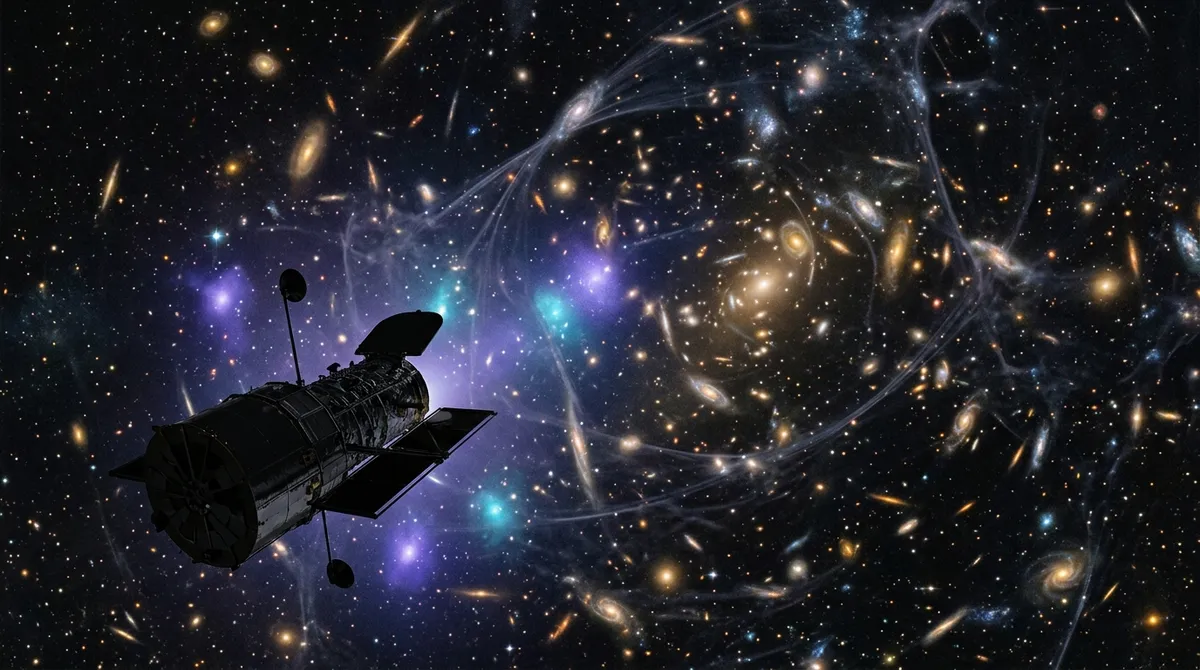
The Universe's Biggest Unsolved Puzzle
It makes up roughly 85% of all matter in the universe, holds galaxies together like invisible scaffolding, and yet scientists have never directly detected a single particle of it. Dark matter remains one of the most tantalising mysteries in all of science — and that may finally be about to change.
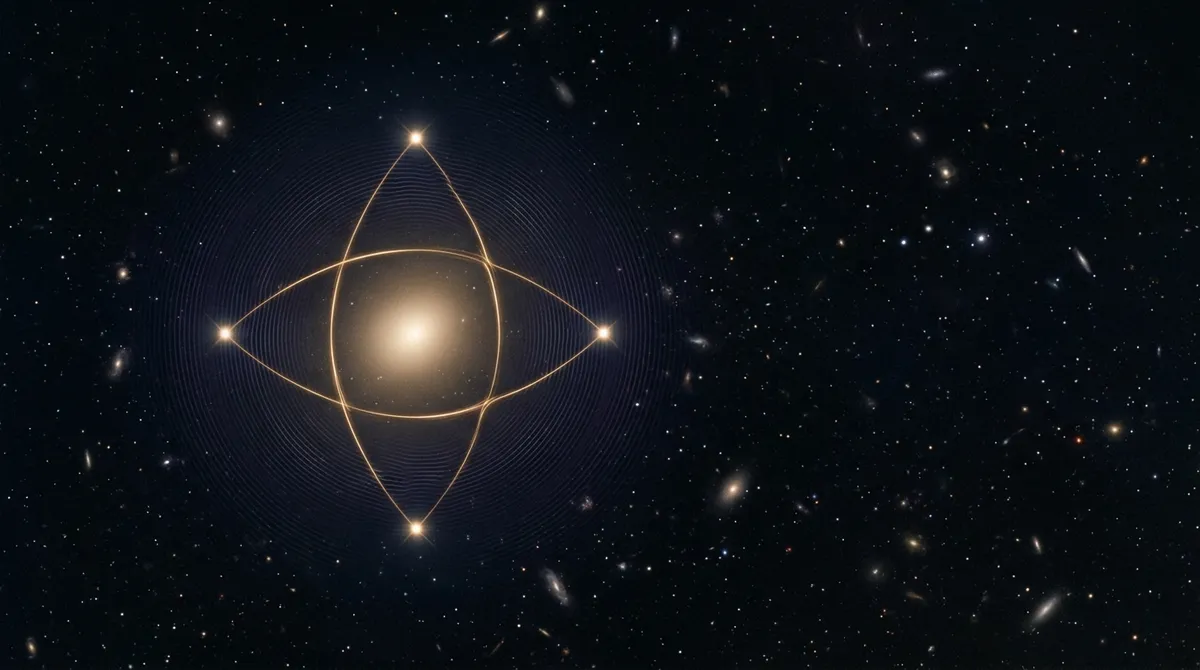
Researchers know dark matter exists primarily because of its gravitational effects. The way galaxies rotate, the way light bends around massive cosmic structures, and the large-scale architecture of the universe all point unmistakably to the presence of something that cannot be seen, touched, or measured directly — at least not yet. Now, a new generation of telescopes and more sophisticated data analysis techniques are bringing scientists closer than ever to identifying what dark matter particles actually are.
Gamma Rays as a Cosmic Fingerprint
One of the most promising approaches involves hunting for gamma-ray signals — high-energy light that could be produced when dark matter particles annihilate one another. If dark matter is made of certain theoretical particles, their collisions should produce a distinctive burst of gamma radiation, acting as a kind of cosmic fingerprint.
Scientists have been scrutinising regions of the sky where dark matter is expected to concentrate, looking for precisely these signals. The challenge has always been separating a potential dark matter signature from the noisy background of other astrophysical processes. But advances in data analysis are steadily improving researchers' ability to do exactly that.
Dwarf Galaxies Offer a Cleaner View
In the search for dark matter signals, smaller is proving to be better. Dwarf galaxies — the faint, compact satellite galaxies that orbit larger ones like our own Milky Way — have emerged as particularly valuable targets. Because they are relatively simple systems with fewer competing sources of radiation, they offer a cleaner environment in which to look for dark matter signatures.
Recent analysis from dwarf galaxies, published in March 2024, has reportedly uncovered intriguing hints of dark matter signals. While researchers are careful not to overstate the findings, the results have added fresh momentum to the field and underscored why these small galaxies are considered among the best natural laboratories for this kind of research.
By contrast, the chaotic environment at the centre of the Milky Way — while rich in dark matter — is far harder to interpret, making it more difficult to isolate any potential signal.
NASA's COSI Mission and a 2027 Countdown
The most anticipated development in the near term is NASA's COSI mission, currently scheduled for launch in 2027. COSI — short for Compton Spectrometer and Imager — is designed to map gamma-ray emissions across the sky with a level of sensitivity and resolution that could represent a genuine leap forward in dark matter detection.
If dark matter annihilation is producing gamma rays somewhere in the cosmos, COSI has been built with the capability to spot them. Scientists working in this field describe the mission as a potential game-changer, one that could deliver breakthrough results within the coming decade.
The Vera C. Rubin Observatory Joins the Hunt
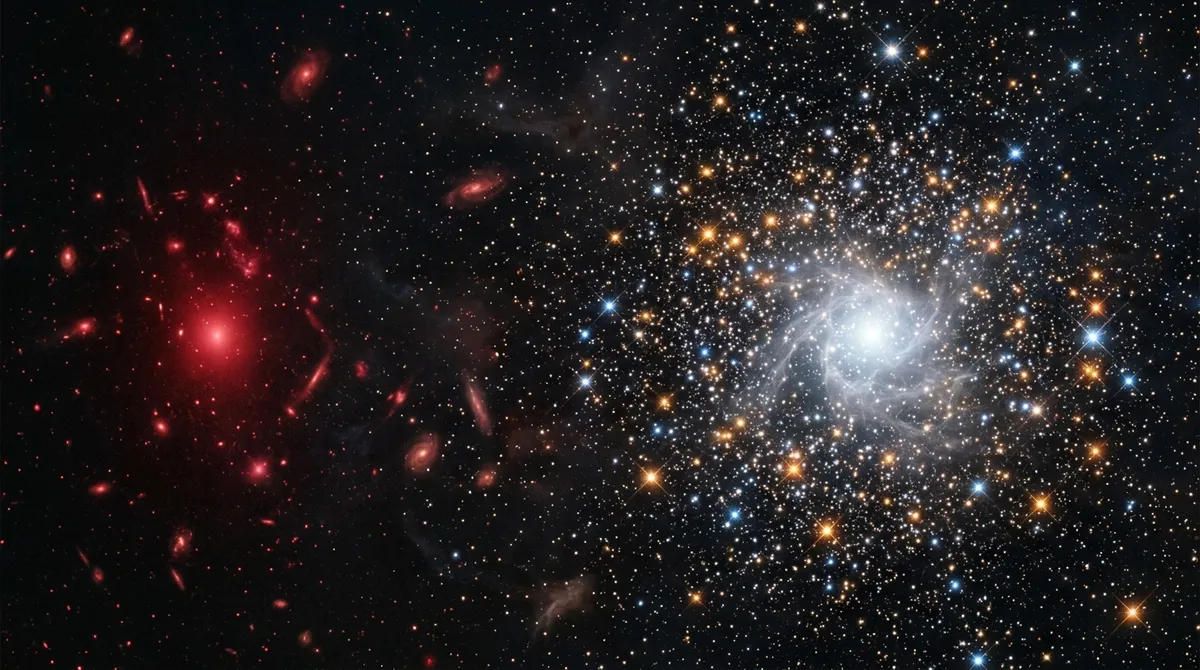
COSI won't be working alone. The Vera C. Rubin Observatory, currently under development, is also expected to contribute significantly to dark matter research. While its primary instruments are focused on visible light rather than gamma rays, the observatory's extraordinary survey capabilities will allow it to map the distribution of galaxies and dark matter across vast stretches of the universe with unprecedented precision.
Together, these facilities represent a new era of observational power — one specifically suited to probing the deep questions about what the universe is actually made of.
Making the Invisible Visible
One way researchers describe their work is by drawing a parallel with medical imaging. Just as a PET scanner can reveal what is happening inside the human body by detecting particles the naked eye cannot see, space telescopes searching for gamma-ray signatures are attempting to make the invisible universe visible through indirect but measurable signals.
It is an apt comparison. Both rely on detecting the by-products of hidden processes, and both have transformed our ability to understand complex systems that would otherwise remain entirely opaque.
A Pivotal Moment in Physics
The coming years represent what many researchers consider a pivotal moment in fundamental physics. With new missions on the horizon, improved analytical tools, and tantalising early hints already emerging from dwarf galaxy studies, the prospect of finally identifying dark matter — understanding not just that it exists, but what it actually is — feels closer than it has in decades.
For a mystery that has puzzled scientists since the mid-twentieth century, that is no small thing. The universe has kept this secret for a very long time. But the tools humanity is now building may finally be equal to the task of uncovering it.