TL;DR
Scientists have detected 'fingerprints' from a black hole's event horizon for the first time, using gravitational waves from a massive merger, opening new avenues in astrophysics and prompting discussions about the nature of gravity.
What Are Gravitational Waves?
Gravitational waves are ripples in the fabric of spacetime, produced by some of the universe's most violent events, like merging black holes. Think of them as the sound of the cosmos, an almost inaudible hum that speaks of colossal phenomena occurring light-years away. Just as a pebble thrown into a pond creates ripples, these waves signal the movements and fusions of celestial bodies, allowing scientists to 'hear' the universe's most secretive corners, including black holes.
Understanding the Event Horizon
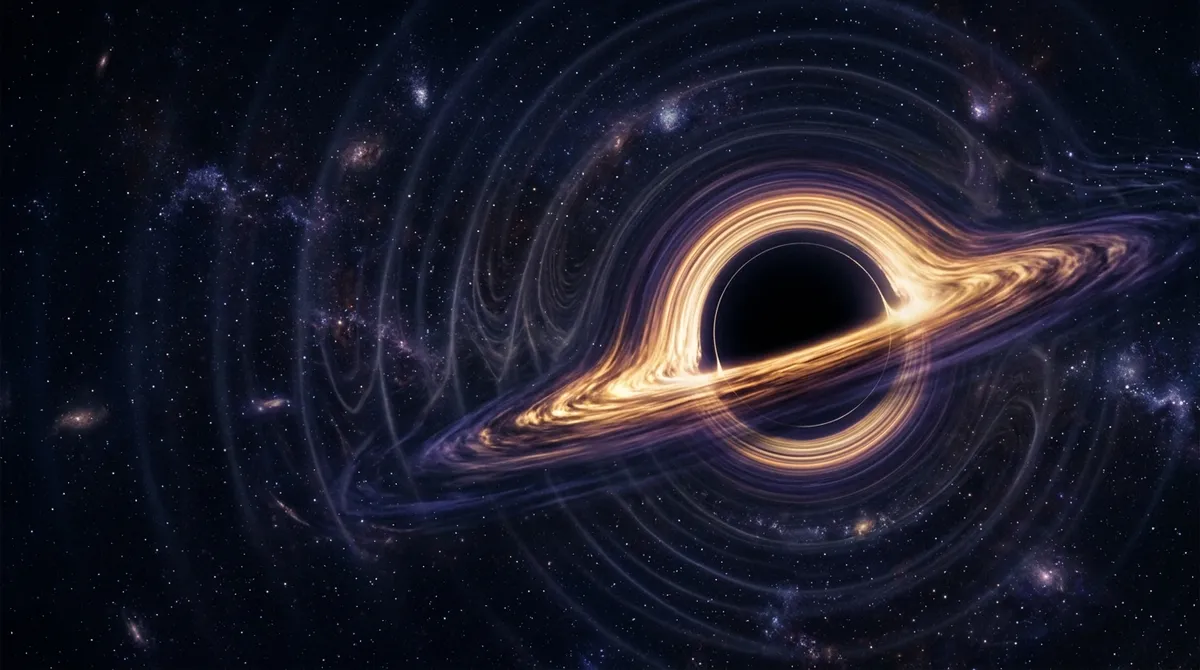
To grasp the significance of this discovery, we first need to understand what an event horizon is. Imagine the point of no return when crossing a waterfall—once you go over, there's no coming back. The event horizon defines the boundary surrounding a black hole; once anything crosses it, not even light can escape, sealing its fate forever. It’s a one-way ticket to oblivion, shrouded in mystery until now.
The Breakthrough Discovery
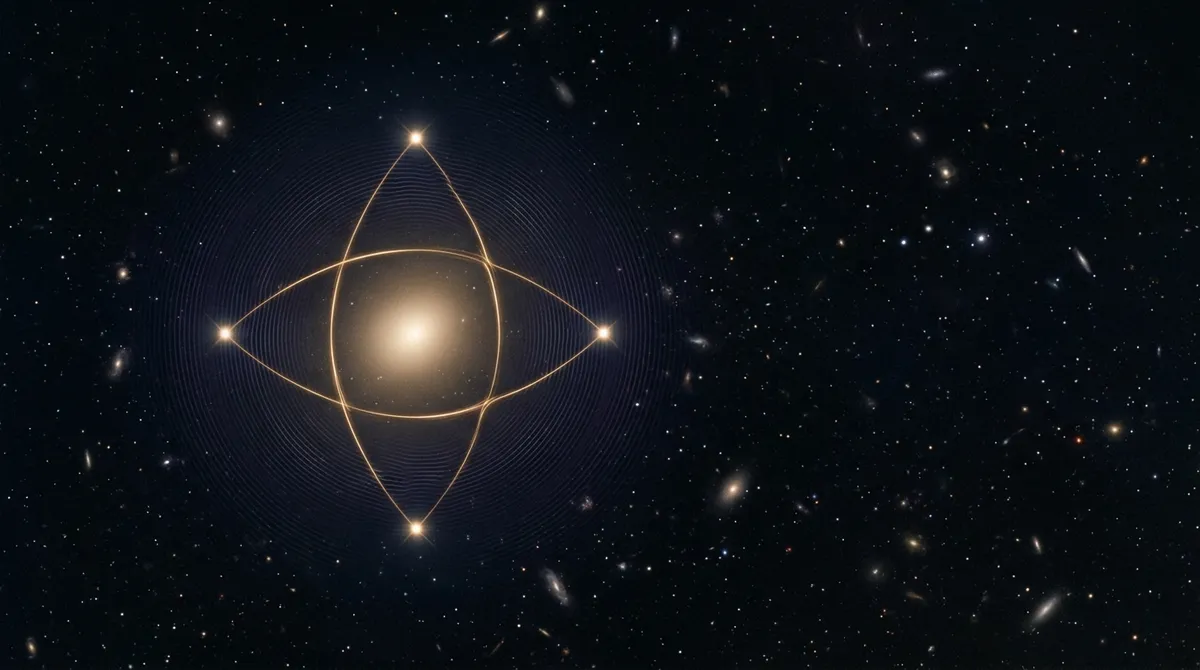
In an exciting new study concerning the black hole merger designated GW250114, scientists have claimed to detect the first definitive signs, or "fingerprints," from an event horizon. This remarkable advancement marks a substantial leap in our understanding of these enigmatic giants and offers a real-time look at the extreme physics surrounding them. Imagine being able to examine the conditions exactly at the brink of darkness!
Previous gravitational wave detections simply acknowledged that these mergers occurred without delving into the intricate details of the event horizons involved. The detection of these fingerprints shifts the focus toward the very nature of black holes and opens discussions on the principles of Einstein's general relativity, a theory that has already stood the test of time in explaining gravitational phenomena.
Why Gravitational Waves Matter
Gravitational waves allow us to study objects we cannot see, effectively turning black holes from mere theoretical constructs into scientifically verifiable entities. The physics of these massive forces can reveal how gravity bends, stretches, and influences spacetime, helping us explore concepts like quantum gravity—an area where modern physics still struggles for clarity. What we glean from these ripples can give us insights into fundamental questions about the universe.
Einstein’s General Relativity and Cautious Skepticism
The findings are notably exciting because they bolster the evidence supporting Einstein's theory of general relativity, which posits that masses warp spacetime around them. The detection of these event horizon fingerprints showcases how accurately our theoretical models match observed phenomena. Yet, despite the enthusiasm, there’s a ripple of caution among some experts. Skeptics urge a thorough analysis before jumping to conclusions, emphasizing the need to multiply check these readings against existing data.
The Road Ahead
What does this discovery mean for the future? The possibility of directly studying quantum effects in gravity is tantalizing. If researchers can refine their methods to probe the conditions right at the event horizon, we may soon witness a revolution in our comprehension of black holes and, by extension, the universe itself. This could eventually lead us to answers about the nature of gravity and the interactions governed by quantum mechanics.
Conclusion
The detection of the black hole's event horizon fingerprints delivers a mix of excitement and caution in the scientific community. As gravitational-wave astronomy continues to expand its horizons, the cosmic mysteries lying within the shadows of black holes may become clearer than ever before. This groundbreaking shift towards understanding what lies at the boundary of black holes poses new questions, mingling awe and inquiry in our quest to unveil the universe's deepest secrets. Let's stay tuned as we move closer to unveiling the mysteries of the cosmos!