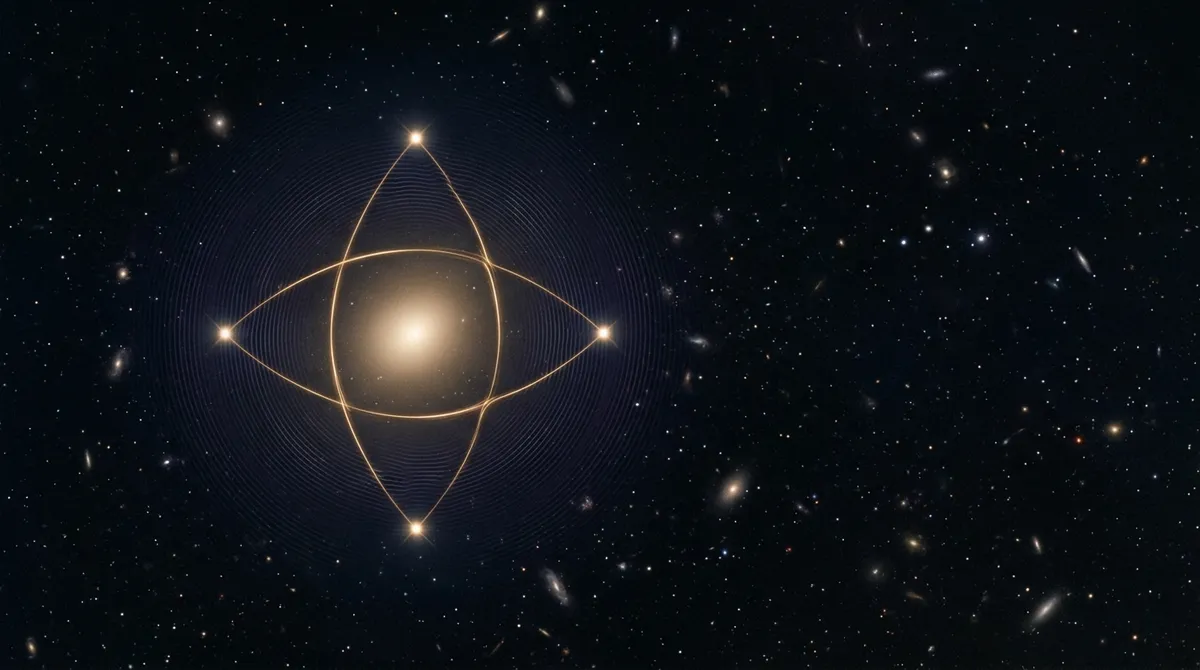
How Gravitational Lensing Reveals the Secrets of Dark Matter
Explore how new wave simulations improve our understanding of dark matter through gravitational lensing, revealing its mysterious nature.

Explore how new wave simulations improve our understanding of dark matter through gravitational lensing, revealing its mysterious nature.

Explore how TiSe₂, Sr₂RuO₄, and hole-doped diamond might enhance dark matter detection through quantum advancements.

Discover how self-assembling nanofibers are enhancing exciton transport in organic materials, paving the way for more efficient electronics.

Discover how a new nanocorral technology allows for precise control over charged excitons and their light emission, paving the way for advances in quantum tech.

Explore how a new knot-theory framework uses doughnut topology to classify textiles, improving fabric durability without altering materials.

While quantum computers grab headlines, quantum sensors using atoms and light are already transforming brain imaging, navigation, and gravity mapping.

New low-cost quantum chemistry method from Shibaura Institute accurately predicts molecular switching points in photochemical reactions, democratizing advanced...

New helioseismology study reveals sun's magnetic activity is shifting closer to surface, potentially making Solar Cycle 25 stronger than traditional measures...
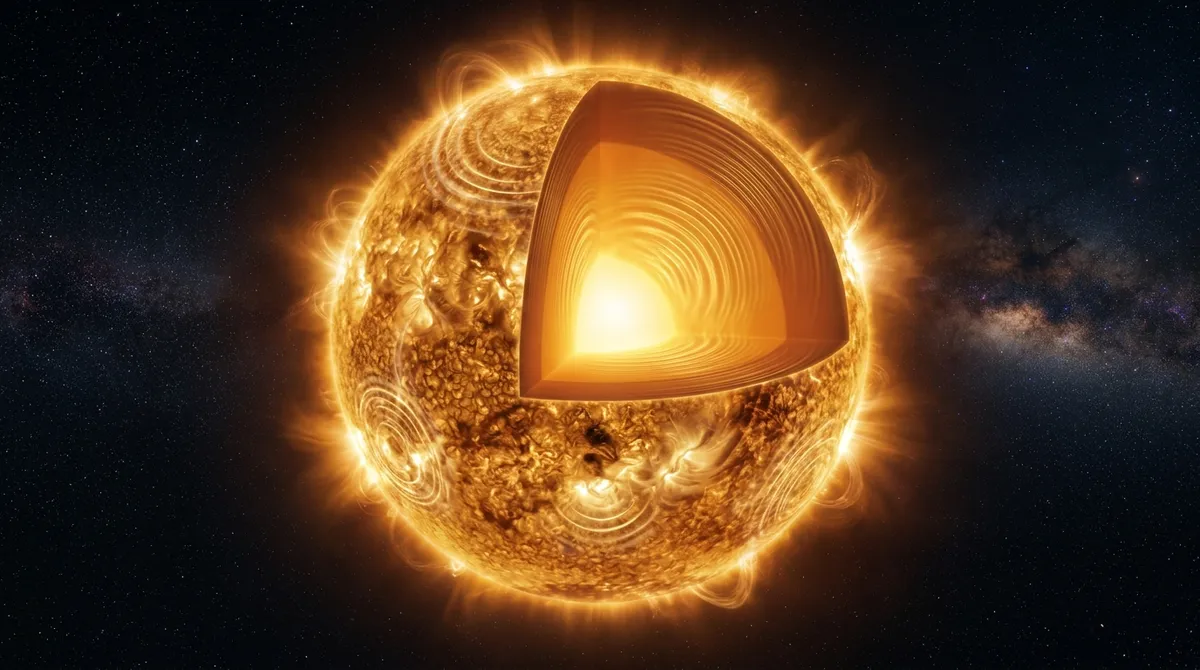
Helioseismology study reveals sun's magnetic activity shifting closer to surface across recent cycles, potentially making space weather harder to predict.

Antarctic ice preserves rare iron-60 stardust from ancient supernovae, giving scientists a direct record of interstellar material reaching Earth as the Solar System moves through the Milky Way.

Scientists are exploring the possibility of creating glass with crystalline properties, potentially revolutionizing materials science. This innovation could enhance strength, durability, and efficiency in various technologies, paving the way for advancements in energy storage and telecommunications.
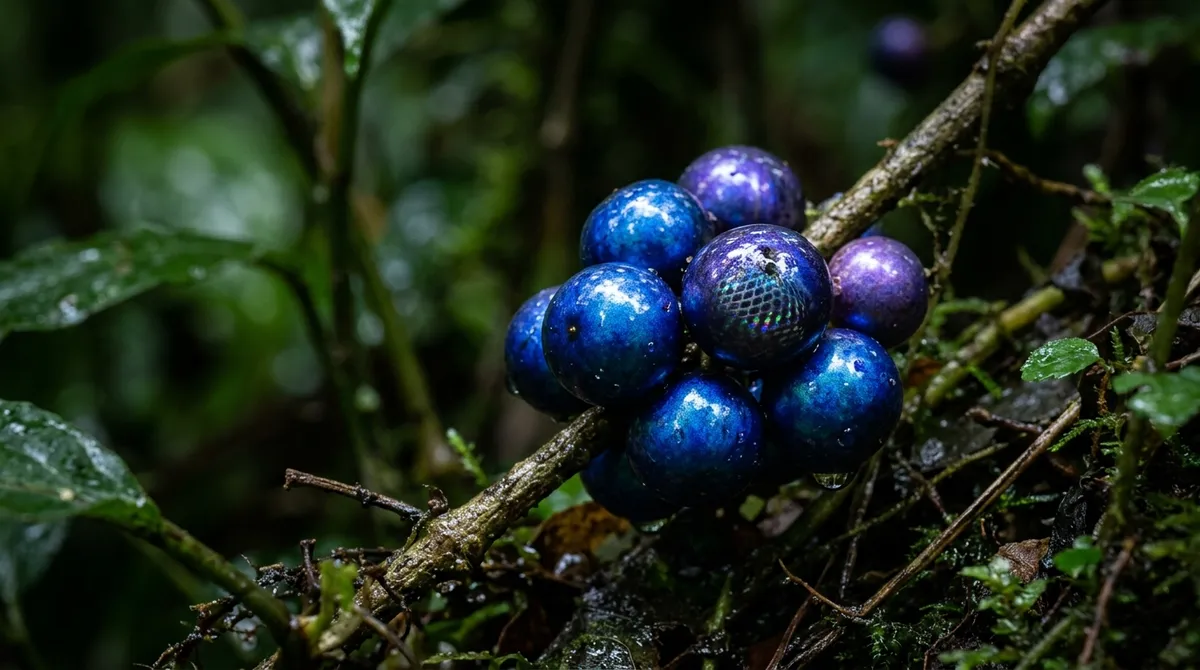
The Pollia condensata, or African marble berry, exhibits a vibrant blue hue not from pigments but due to structural coloration, an optical illusion created by microscopic structures reflecting light, attracting animals for seed dispersal and inspiring technological innovations.