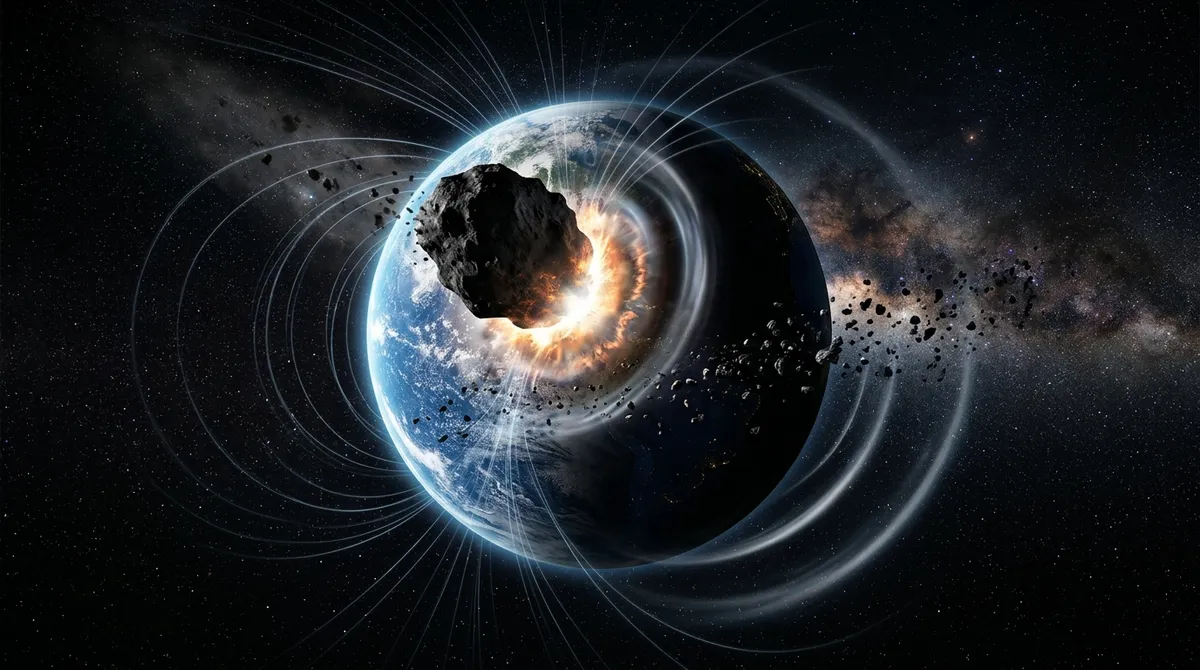
In a recent trailer titled "I Destroyed The Planet For Science," creator Miniminuteman presents a captivating preview of a science-themed video where the dramatics of planetary destruction unfold before our eyes. While the trailer promises an exciting spectacle, it also opens up a broader discussion about the real science behind such catastrophic events. Let’s take a closer look at the physics that govern the destruction of a planet and how these scenarios play out in both theoretical and practical realms.
The Science of Planetary Destruction
When we talk about destroying a planet, it’s essential to first define what we mean by "destruction". This can refer to a variety of scenarios, including:
- Collision with a large celestial body: This could be anything from a large asteroid or comet impacting the planet to the collision of two planets in a theoretical scenario.
- Supernova effects: If a nearby star goes supernova, the shockwave might strip a planet of its atmosphere and surface layers.
- Artificial or experimental methods: This could involve advanced technology or hypothetical devices that could manipulate planetary systems.
Each of these methods delves into fundamental principles of physics, such as gravity, energy transfer, and the laws of motion, making it a fascinating subject to explore scientifically.
Impact of a Collision
Let’s focus on the collision scenario, which is the most relatable to Earth. An object roughly the size of a city can cause widespread destruction, and if it were one kilometer wide, the effects would be catastrophic. A collision of this size could release the same amount of energy as millions of nuclear bombs. The kinetic energy released upon impact is calculated using the formula:
K.E. = 0.5 * m * v^2
where m represents mass and v the velocity of the colliding object. For instance, considering a one-kilometer-diameter asteroid traveling at 15 kilometers per second, we can see just how severe the implications could be.
The Role of Gravity
Gravity, the force that keeps planets and other celestial bodies in orbit, also plays an essential role in planetary disruption scenarios. The high gravitational pull of larger bodies can attract comments or smaller asteroids, increasing the likelihood of a catastrophic collision. This gravitational interaction alters the trajectories of smaller objects, which can lead to larger scale devastation over time.
Technological and Theoretical Destruction
In realms of science fiction and advanced theoretical physics, the idea of artificially destroying a planet opens up discussions about advanced technologies that don’t currently exist. Concepts like the Death Star in Star Wars, which could obliterate planets, push the limits of our understanding but also ground themselves in real science, such as energy transfer and the challenges of energy sourcing.
While exploring theoretical constructs, scientists examine possibilities through computer simulations and mathematical modeling, providing insights into how energy sources might realistically operate at such scales.
Conclusion
As trailers like "I Destroyed The Planet For Science" spark interest in planetary destruction, they also raise critical questions about the forces at play when celestial bodies interact. Understanding the underlying physics can enrich our appreciation for such spectacles, making them more than pure entertainment. Indeed, the next time you watch an incredible simulation of planet destruction, you might find yourself thinking about the real physics that could power such dramatic outcomes. Keep your curiosity alive, and explore how the universe operates — science holds the answers to the spectacular and the catastrophic alike!