
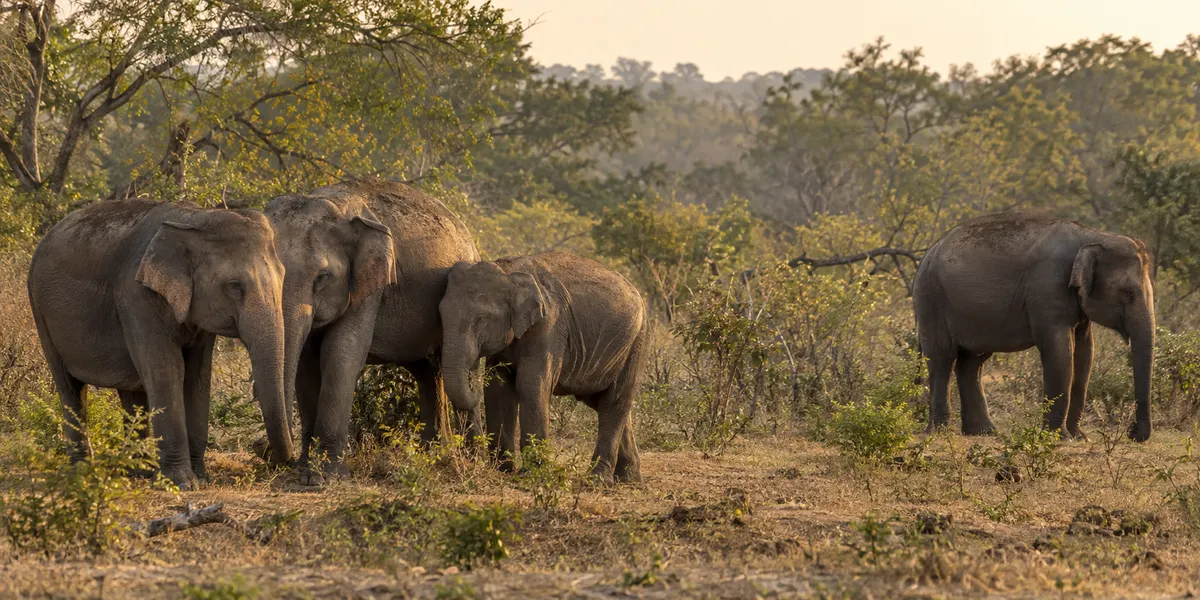
Counting animals is the standard way to tell whether a species is doing okay. A new study of Asian elephants suggests that count may miss something important: the relationships between the animals. By the end of this article, you'll know what researchers found in Sri Lanka, why a social "tipping point" matters, and why conservationists may need to track connections as well as headcounts.
What the researchers found
Researchers at UC San Diego tracked more than 440 female Asian elephants in Sri Lanka over 12 years, according to a UC San Diego report on the work. Their finding: as the population declines, the elephants' social networks are fracturing.
That means the damage isn't only a matter of fewer animals. The animals that remain are becoming more isolated from one another.
The tipping point problem
The study warns that once elephant communities pass a social "tipping point," they may become smaller, more isolated, and harder to restore, per the UC San Diego report.
Think of it like a web with strands being snipped. Lose a few and the web holds. Lose enough, and it stops working as a web. The researchers' warning is that elephant society may behave similarly, with a threshold beyond which recovery gets difficult even if conditions improve.
That is the key idea to take away: a population can look like it's hanging on while its social structure is already coming apart.
Why female elephants are the focus
The study followed female Asian elephants, more than 440 of them. We can't say from the available reporting exactly how the researchers measured each social tie, so this article sticks to what was reported: the networks they tracked over 12 years showed fracturing as numbers fell.
Why headcounts alone can mislead
Elephant populations face pressure from habitat disruption, human conflict, poaching, and ecological change, according to the report. Conservation efforts typically respond to these pressures by trying to stop declines in numbers.
This research suggests that approach may need a second gauge. Social connectivity could serve as an early warning signal for population collapse, appearing before the decline is obvious in the totals.
Here's a practical way to think about it:
- Numbers tell you how many are left. They're essential, but they can lag behind trouble.
- Social networks tell you how the group is functioning. If ties are thinning out, that may be a flag worth acting on early.
That is my interpretation of the study's framing rather than a quote from the researchers, but it follows directly from their warning about tipping points.
What this means for conservation
If social connectivity really does work as an early warning sign, monitoring it could give conservationists more time to respond. Acting before a tipping point is likely easier than trying to rebuild a fractured community afterward, given the researchers' caution that such communities may be harder to restore.
The work also reframes what's at stake when habitat is disrupted or conflict with people rises. The loss isn't just individual animals. It's the web of relationships that make up an elephant society.
The human parallel
It's tempting to compare this to human communities, where shrinking populations and growing isolation can also weaken the bonds that hold a place together. That comparison is an analogy, not a finding of the study, but it helps explain why the result feels intuitive: social animals depend on each other, and losing the connections can matter as much as losing individuals.
The takeaway
When you read about a wildlife population, ask two questions instead of one: how many are there, and how connected are they? The Sri Lankan elephant study suggests the second question may be the one that warns us first.
Source: UC San Diego.