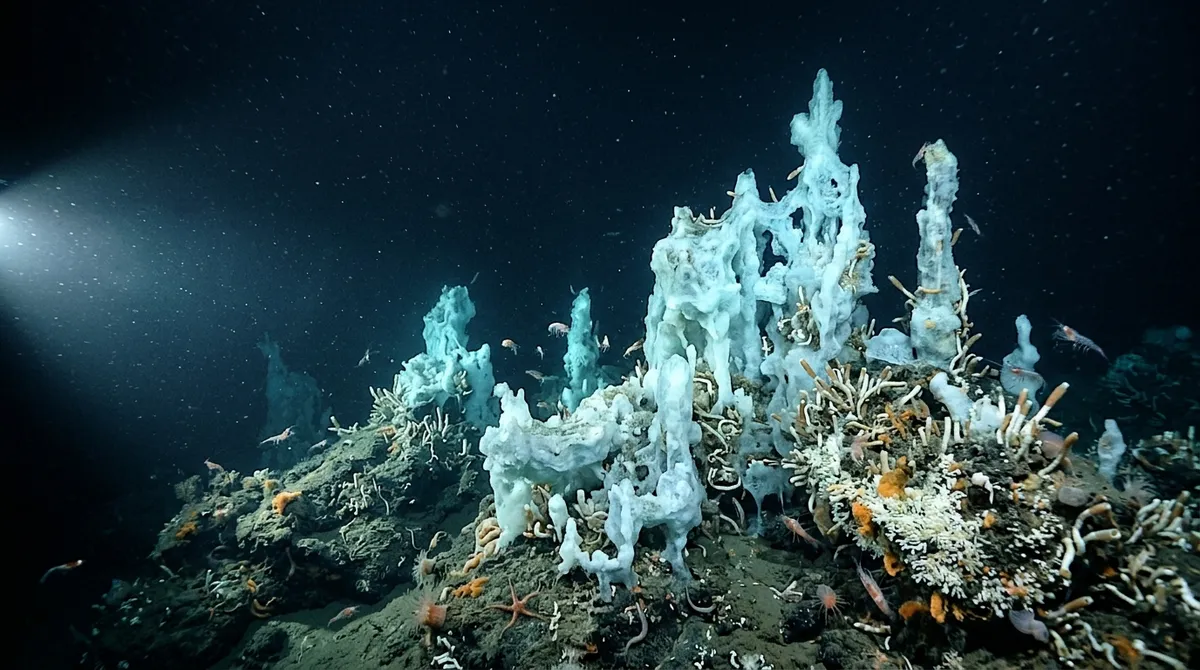
In a remarkable discovery beneath the depths of the Arctic Ocean, scientists have uncovered a vast deposit of gas hydrates off the coast of Greenland. This find, considered the world's deepest known gas hydrate, is not only significant for its size but also for the thriving ecosystem it supports. Located more than 1,200 meters below sea level, this extraordinary underwater landscape offers new insights into the biodiversity and geological processes of our planet.
Understanding Gas Hydrates
Gas hydrates are crystalline substances where gas molecules, primarily methane, are trapped within a lattice of water ice. Found predominantly in ocean sediments and permafrost, these hydrates are of great interest due to their potential as an energy source. However, their stability is sensitive to changes in pressure and temperature, making their study crucial in understanding climate change impacts.
The Discovery Location
This groundbreaking discovery took place off Greenland's coast, an area previously unexplored for such deposits. The site, situated over 1,200 meters deep, is now the deepest known location for gas hydrates globally. This region's unique environmental conditions make it an ideal natural laboratory for studying these phenomena and the life forms they support.
Teeming Life Beneath the Ice
Scientists were astonished to find a vibrant ecosystem thriving around the gas hydrates. The presence of chemosynthetic bacteria, which convert methane into energy, forms the foundation of this ecosystem. These bacteria support a diverse range of life forms, including worms and other marine organisms, creating a complex food web in the otherwise dark, cold depths of the ocean.
The Importance of This Discovery
The implications of this discovery are multifaceted. Firstly, it expands our understanding of how life can thrive in extreme environments, offering clues about potential life on other planets. Secondly, it underscores the importance of gas hydrates as both a potential energy source and a factor in global carbon cycles. The presence of methane, a potent greenhouse gas, highlights the need for careful study of these deposits to understand their role in climate dynamics.
Challenges and Future Research
Exploring such remote and extreme environments poses significant technical and logistical challenges. The deep-sea conditions require advanced technology for exploration and sampling. Future research aims to explore the stability of these hydrates and their response to environmental changes. Understanding these dynamics is crucial for assessing their potential impact on global climate systems.
Conclusion
This discovery off Greenland's coast not only adds to our knowledge of gas hydrates but also illustrates the resilience and adaptability of life in extreme conditions. As researchers continue to explore these underwater marvels, we gain valuable insights into Earth's processes and the intricate balance of its ecosystems. This study reminds us of the vast unknowns that lie beneath our oceans, waiting to be uncovered.