A Decade-Old Climate Mystery Finally Solved
A climate puzzle that has perplexed researchers for over a decade may finally have an answer, thanks to new insights into how the greenhouse effect governs temperature changes across Antarctica. According to recent research, Antarctica's regional temperature variations follow a dramatically different pattern than scientists previously understood.
Bradley Markle, an assistant professor at the Institute of Arctic and Alpine Research at the University of Colorado Boulder, first noticed an odd pattern while examining temperature records a decade ago. This observation has now led to groundbreaking findings that could reshape how climate models predict Antarctica's response to modern warming.
The Greenhouse Effect Takes Center Stage
The research reveals that Antarctica's regional temperature changes are governed more by the nonlinear greenhouse effect than by what scientists call the traditional Planck response. This discovery challenges long-held assumptions about polar climate dynamics and suggests that warmer Antarctic regions may be far more sensitive to climate change than previously thought.
According to reports, warmer Antarctic regions appear to warm or cool more dramatically because water vapor amplifies greenhouse trapping as temperature rises. This nonlinear relationship means that small changes in these already-warmer areas can trigger disproportionately large temperature swings.
Ancient Ice Reveals Modern Climate Rules
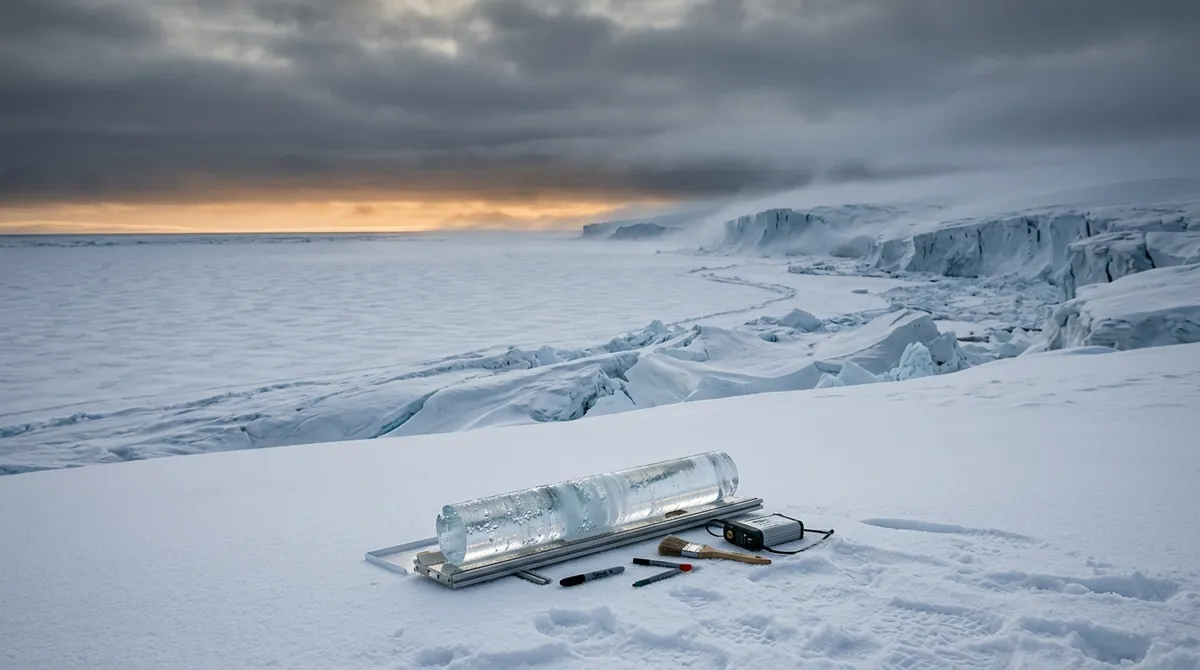
The breakthrough came through analysis of paleoclimate records, particularly ice cores spanning an impressive 160,000 years of Antarctic climate history. These ancient archives provided crucial evidence for understanding processes that are playing out in today's rapidly changing climate.
The ice core data helped researchers identify why Antarctica doesn't warm evenly across its vast expanse. Instead of responding uniformly to global temperature changes, different regions of the continent show varying degrees of sensitivity based on their baseline temperatures and local atmospheric conditions.
Antarctica as Earth's Climate Exhaust Valve
This research positions Antarctica as something of a "heat exhaust valve" for Earth's climate system, according to reports. The continent's role in global climate regulation appears far more complex than simple heat absorption and reflection. The nonlinear greenhouse effects mean that as the planet warms, Antarctica's warmest regions may experience amplified changes that could have cascading effects on ice sheet stability.
The findings suggest that traditional climate models may have underestimated the sensitivity of certain Antarctic regions to temperature changes. This has significant implications for understanding how the continent's massive ice sheets might respond to continued global warming.
Reshaping Ice Sheet Predictions
As climate scientists work to predict Antarctica's future under various warming scenarios, these findings could fundamentally alter their assumptions about polar climate dynamics. The research indicates that the relationship between global temperature rise and Antarctic response is far more nuanced than previously understood.
The nonlinear greenhouse effect means that warming patterns across Antarctica won't simply scale with global temperature increases. Instead, certain regions may experience dramatically amplified changes while others remain relatively stable, creating complex patterns of ice loss and accumulation.
Why This Matters for Climate Science
The research highlights the critical importance of paleoclimate records in understanding current climate processes. The 160,000-year ice core data provided the long-term perspective necessary to identify patterns that might not be apparent in shorter-term observations.
This discovery also emphasizes how water vapor feedback mechanisms can create unexpected climate responses in polar regions. As temperatures rise, increased atmospheric moisture can amplify greenhouse trapping effects, creating a feedback loop that traditional climate models may not fully capture.
Looking Forward
The implications of this research extend beyond academic understanding of Antarctic climate dynamics. As policymakers and scientists work to predict future sea level rise and ice sheet behavior, these findings suggest that regional variations in Antarctic response could be larger and more complex than current models suggest.
The study represents a significant step forward in understanding how Earth's largest ice sheet responds to climate change, potentially improving predictions of future ice loss and global sea level rise. For climate scientists, it underscores the value of combining modern observations with ancient climate records to unlock the secrets of our planet's complex climate system.