A Decade-Long Climate Puzzle Finally Solved
After ten years of investigation, scientists have cracked a climate mystery that could reshape our understanding of Antarctica's response to global warming. According to reports, new research shows that Antarctica's regional temperature changes are governed more by the nonlinear greenhouse effect than by the traditional Planck response that climate models typically rely on.
The breakthrough came from analyzing temperature records that revealed an odd pattern: Antarctica's warmer regions appear to warm or cool more dramatically than their colder counterparts. This discovery challenges long-held assumptions about how polar climate dynamics work and could significantly impact predictions about ice sheet behavior.
The Greenhouse Effect's Hidden Role
The key to solving this puzzle lies in understanding how water vapor amplifies greenhouse gas trapping as temperatures rise. According to the research, this nonlinear relationship means that warmer parts of Antarctica are actually more sensitive to climate change than previously thought.
This finding turns conventional climate theory on its head. Instead of uniform temperature responses across the continent, Antarctica behaves more like Earth's "heat exhaust valve," with different regions responding dramatically differently to the same climate forces.
Ancient Ice Cores Reveal Climate Secrets
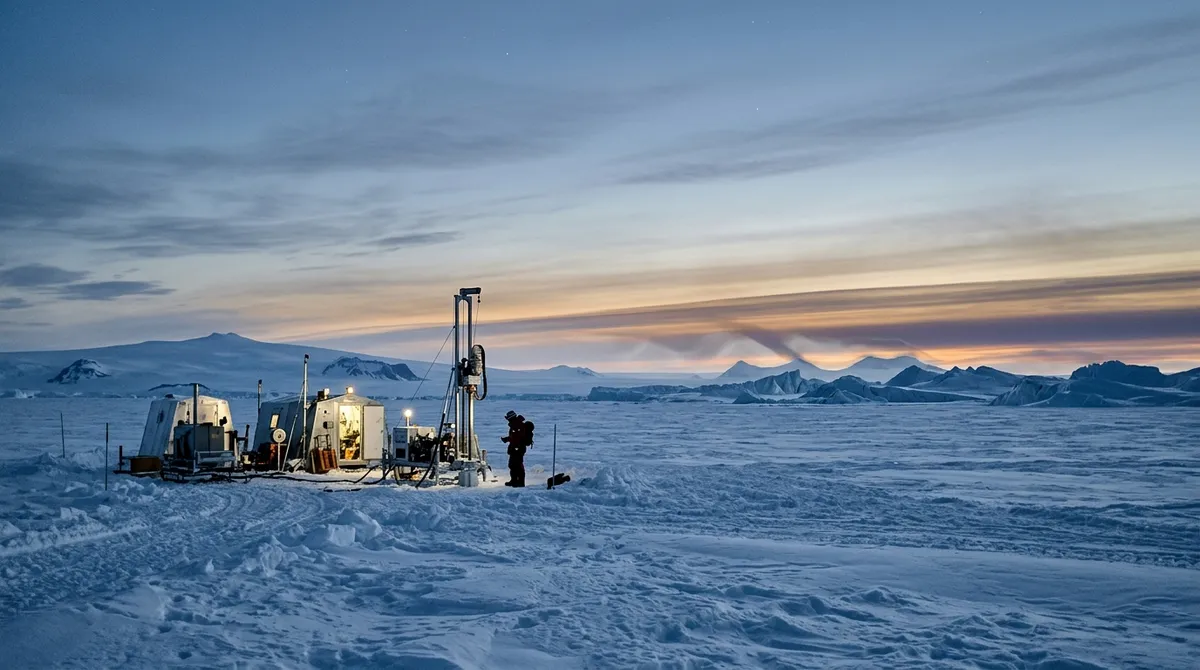
The breakthrough wouldn't have been possible without paleoclimate records, particularly ice cores spanning an impressive 160,000 years. These ancient archives proved crucial for understanding the climate processes playing out today, demonstrating how historical data can illuminate modern climate dynamics.
According to reports, Bradley Markle, an assistant professor at the Institute of Arctic and Alpine Research at the University of Colorado Boulder, first noticed the odd pattern a decade ago while examining temperature records. This observation launched the research that would eventually solve the 160,000-year climate puzzle.
Implications for Climate Modeling
The discovery has significant implications for how scientists model Antarctica's future. As climate models attempt to predict the continent's response to modern warming, this finding suggests that current assumptions about polar climate dynamics may need substantial revision.
The research highlights a fundamental shift in understanding: rather than treating Antarctica as a uniformly responding landmass, climate scientists must now account for the varying sensitivity of different regions based on their baseline temperatures.
What This Means for Ice Sheet Predictions
Perhaps most importantly, this research could reshape predictions about Antarctica's ice sheets. If warmer regions are more sensitive to temperature changes than previously thought, it could affect estimates of ice loss and sea level rise.
The findings suggest that Antarctica's response to climate change is more complex and potentially more variable than traditional models predicted. This complexity means that some regions might experience more dramatic changes than others, creating a patchwork of climate responses across the continent.
The Broader Climate Context
This discovery adds another layer to our understanding of global climate systems. Antarctica plays a crucial role in regulating Earth's temperature, and understanding its regional variations is essential for accurate climate predictions.
The research demonstrates the ongoing importance of paleoclimate studies in revealing the hidden rules of our climate system. By looking back 160,000 years, scientists were able to identify patterns that explain current climate behavior and could predict future changes.
Looking Forward
As climate scientists work to refine their models, this new understanding of Antarctica's regional temperature responses will likely become a critical component of future predictions. The finding that the greenhouse effect governs these changes more than traditional responses suggests that our climate system operates with more complexity than previously recognized.
This breakthrough represents not just a solution to a decade-old mystery, but a fundamental advancement in our understanding of polar climate dynamics that could influence climate science for years to come.